The largest island on the Andaman side with a developed coastline, hills, protected bays and dense urban zones on the east and central axis. Resort areas line the western arc with long beaches facing open water, while the interior holds residential belts, road grid and service infrastructure supporting year-round traffic.
The northernmost marina on Phuket, located on the sheltered eastern side near the bridge to the mainland. It serves as a year-round deep-water base for large sailing and motor yachts, protected from southwest swells and monsoon exposure. The approach channel is well-marked, and depth allows access at all tides. The shore area holds maintenance docks, a small hotel, crew facilities, restaurants and logistic services, creating a self-contained operating hub for private and commercial vessels.
Ko Phanak is known for its sea caves and hidden hong-lagoons that open at suitable tide. Access is done by kayak from the boat, and inside the water stays calm under limestone roofs.
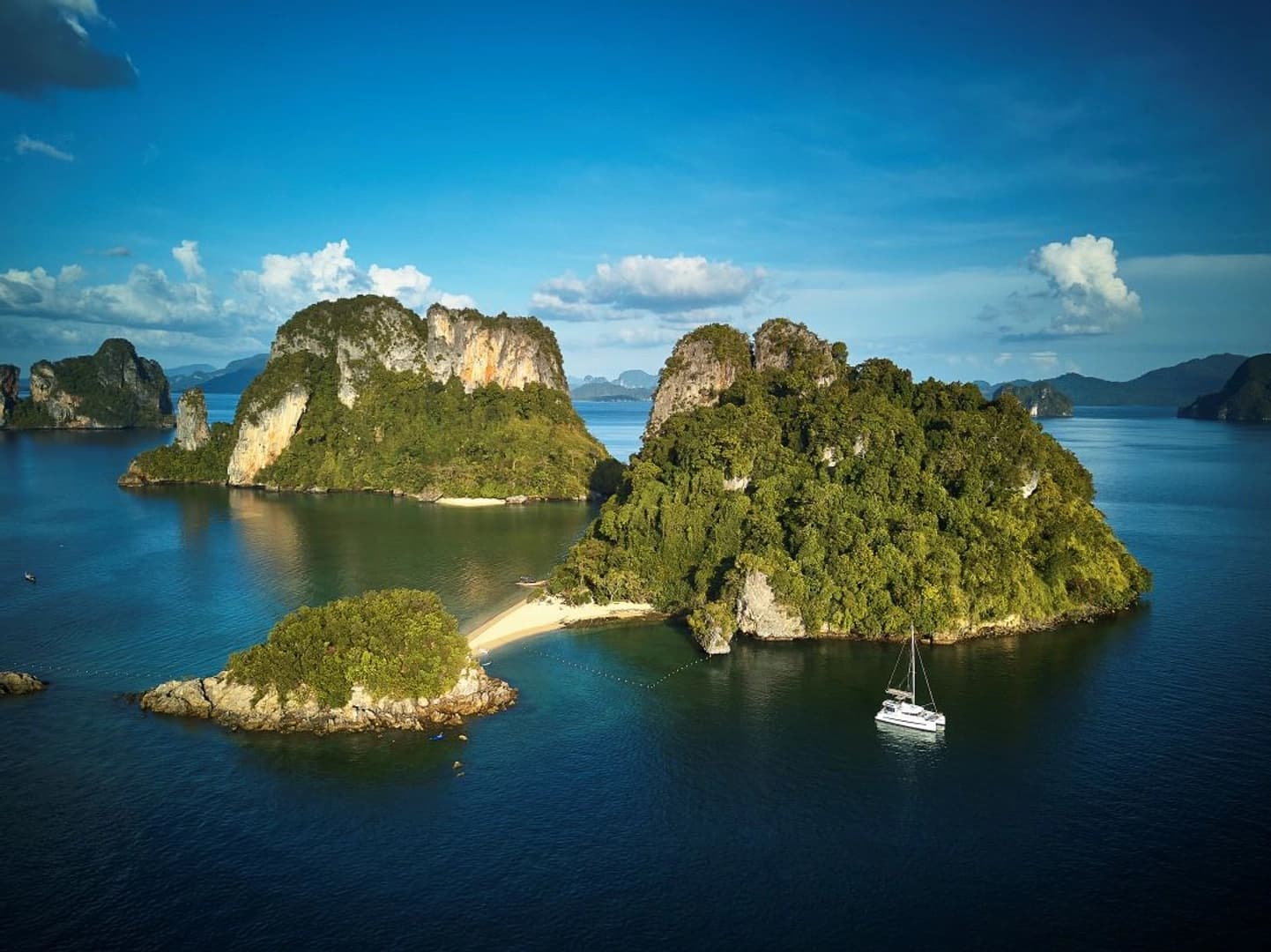
A small island in Krabi province with a sandbar that appears at low tide linking to nearby rocks and shallows. Calm water around the island allows easy swimming and short snorkel sessions near the shore
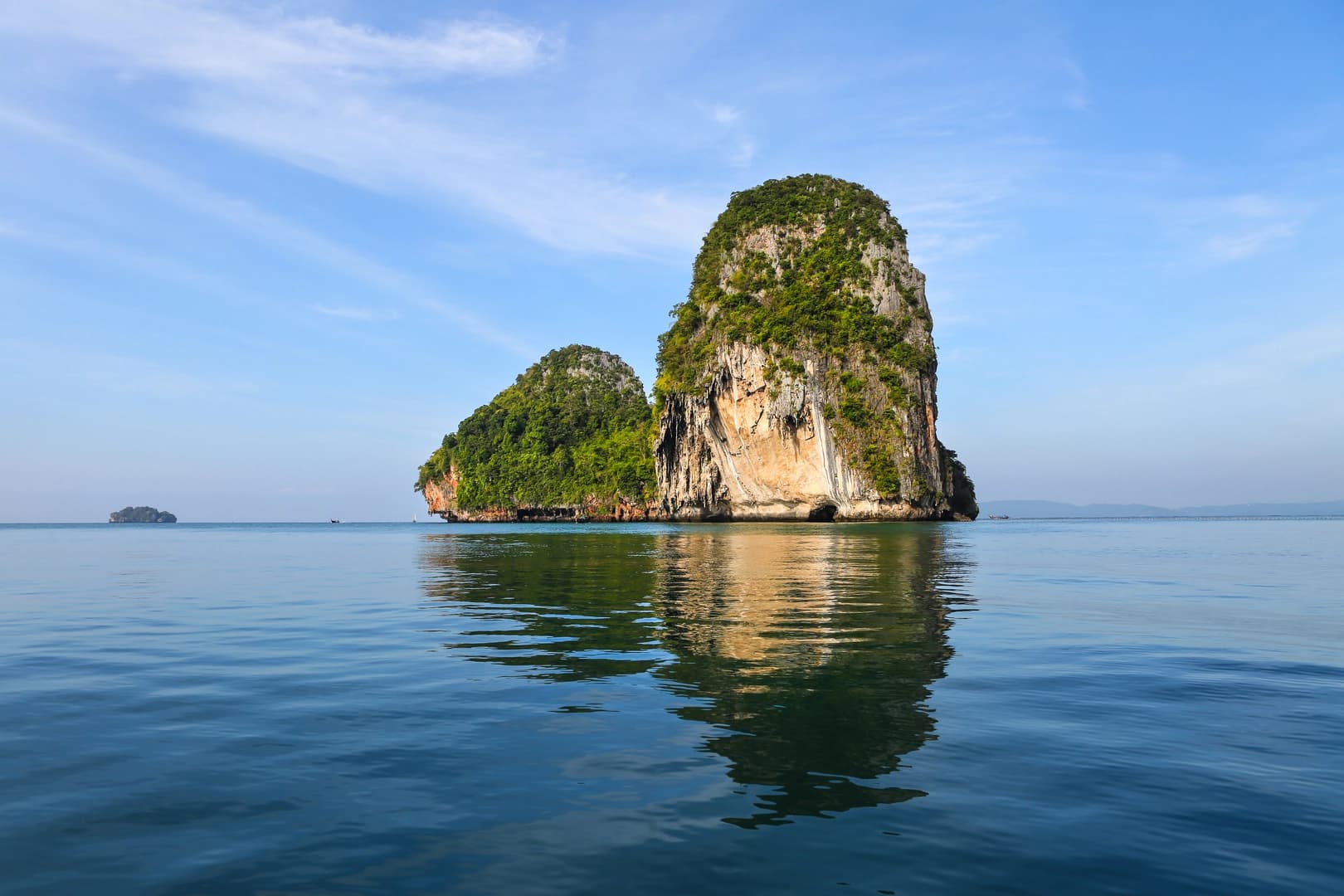
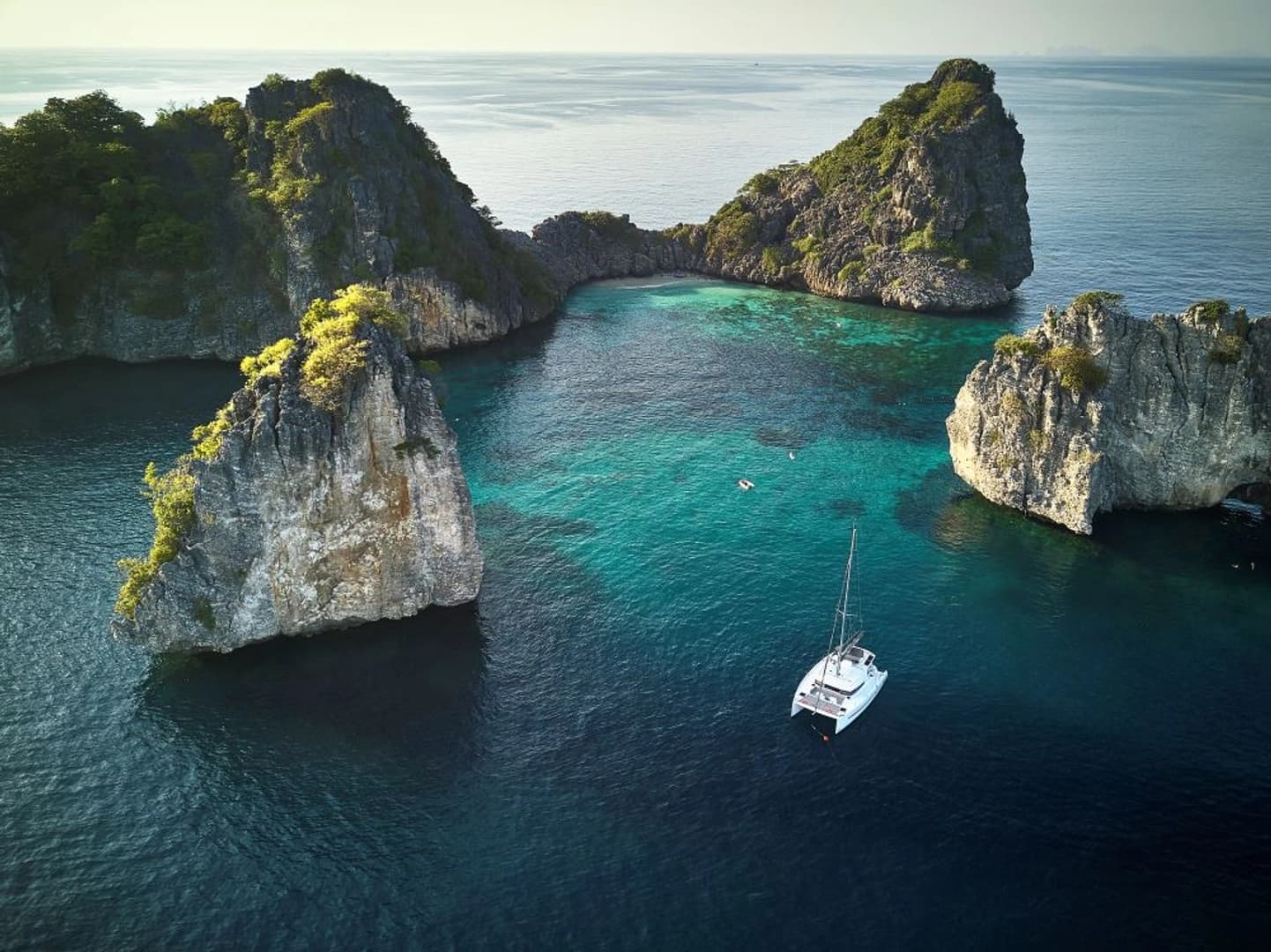
A limestone island in Krabi province known for its enclosed lagoon and vertical cliffs. Access is by boat with swimming and snorkeling in calm water depending on conditions and park rules.
A coastal resort area west of Krabi Town facing the Andaman Sea, known for its long curved beach, limestone backdrop and direct longtail access to the islands offshore. The shore hosts hotels, piers, dive centers and casual beach restaurants, serving as both a holiday base and a launch point for nearby coves and Phra Nang Peninsula.
A sheltered beach area in Krabi accessible mainly by boat due to steep limestone walls blocking road access. Calm water and high cliffs create a cove-like setting suitable for swimming and short land stops between boat legs.
The largest island in the Phi Phi archipelago, Phi Phi Don features a mix of relaxed beach areas and lively village life. It acts as the main hub for travellers visiting the region, with plenty of accommodation, restaurants and boat services.
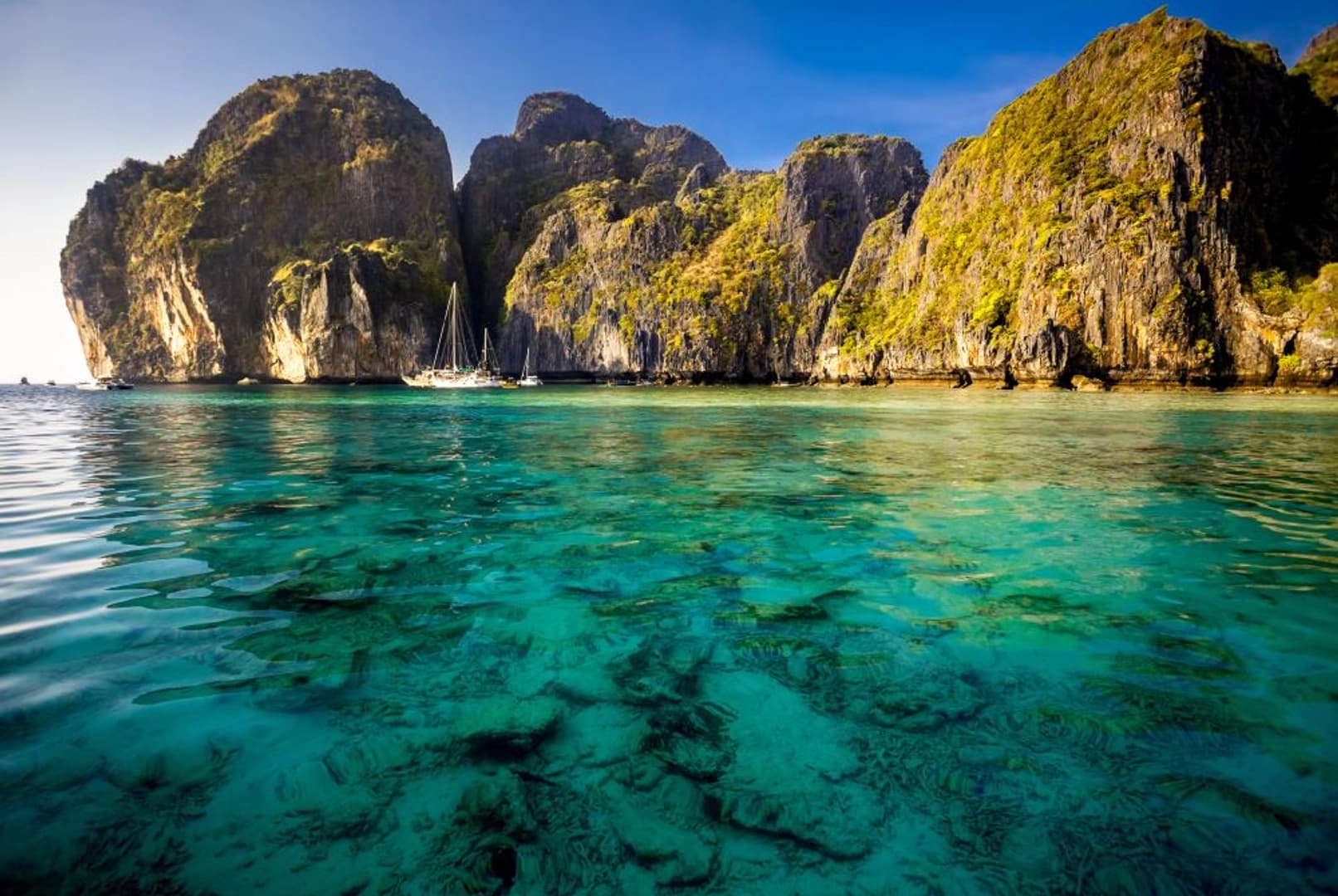
A protected limestone island south of Phi Phi Don known for sheer cliffs and enclosed bays with clear water. Access is typically by boat with swimming and snorkeling in calm coves depending on conditions and park rules
A long twin-island formation south of Krabi composed of Ko Lanta Yai and Ko Lanta Noi, connected by a bridge and ringed with beaches on the west side. The terrain is hilly with dense vegetation, and the coastline alternates between long open sand stretches and rocky headlands. Tourism is concentrated on the western arc, while the eastern shore retains small fishing communities and mangrove areas.
A pair of small islands south of Ko Lanta within Mu Ko Lanta National Park, known for crystal-clear water, white sand and vibrant coral reefs. The western side offers snorkeling and diving spots with high visibility, while the eastern bay provides a calm anchorage used by day boats and liveaboards during the dry season.
A slender island south of Ko Lanta with white sandy beaches, turquoise shallows and a narrow coral shelf close to shore. It belongs to Hat Chao Mai National Park and is known for calm snorkeling water and the annual underwater wedding ceremony held on its eastern side. The island has limited accommodation and remains quieter than the larger islands nearby.
A mid-sized island off the Trang coast, part of Hat Chao Mai National Park, known for its limestone cliffs and the famous Emerald Cave (Tham Morakot) accessible only by swimming through a short sea tunnel. The western side has beach resorts and mooring spots, while the eastern side faces the mainland with mangroves and shallow tidal flats.
The largest island in the Phi Phi archipelago, Phi Phi Don features a mix of relaxed beach areas and lively village life. It acts as the main hub for travellers visiting the region, with plenty of accommodation, restaurants and boat services.
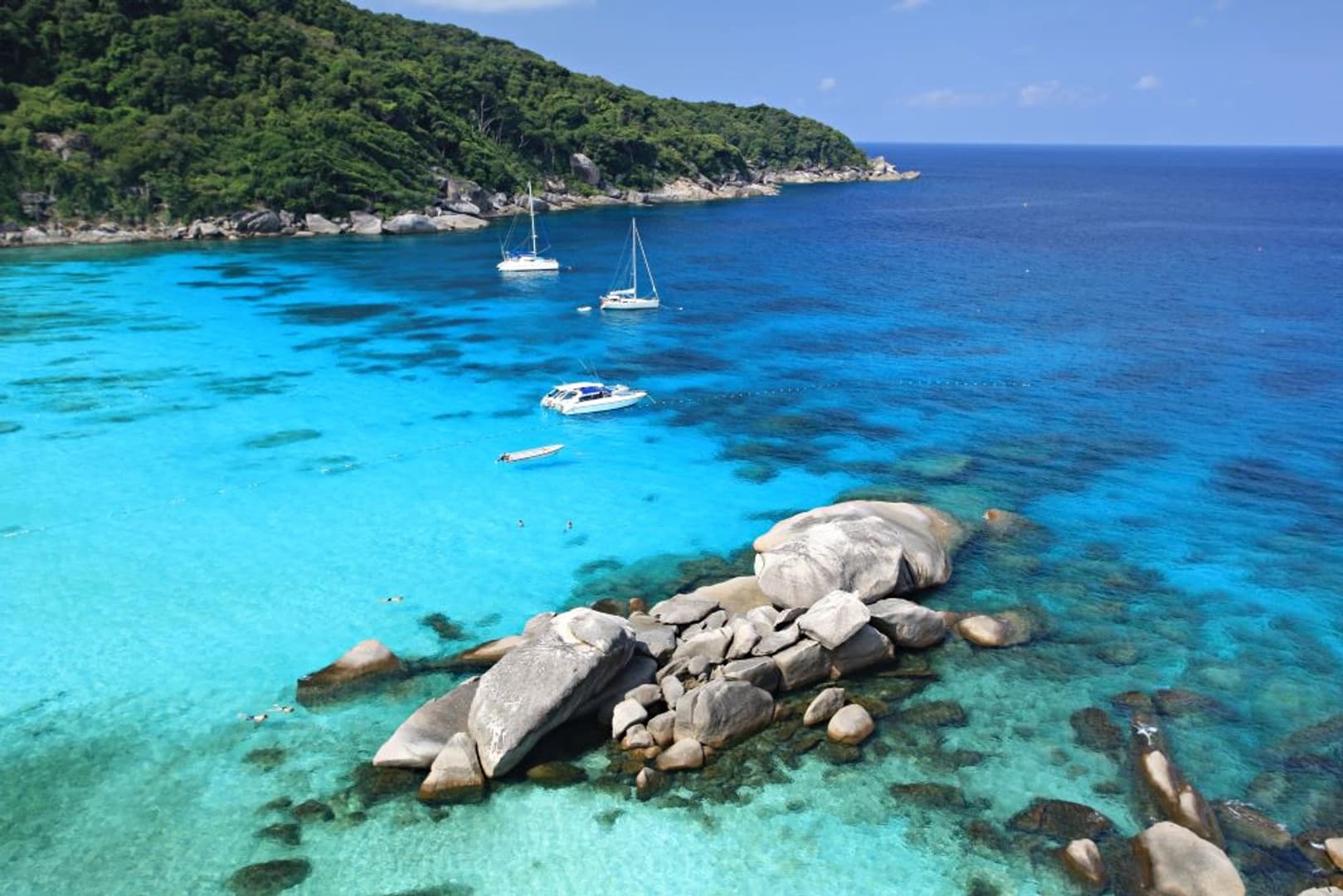
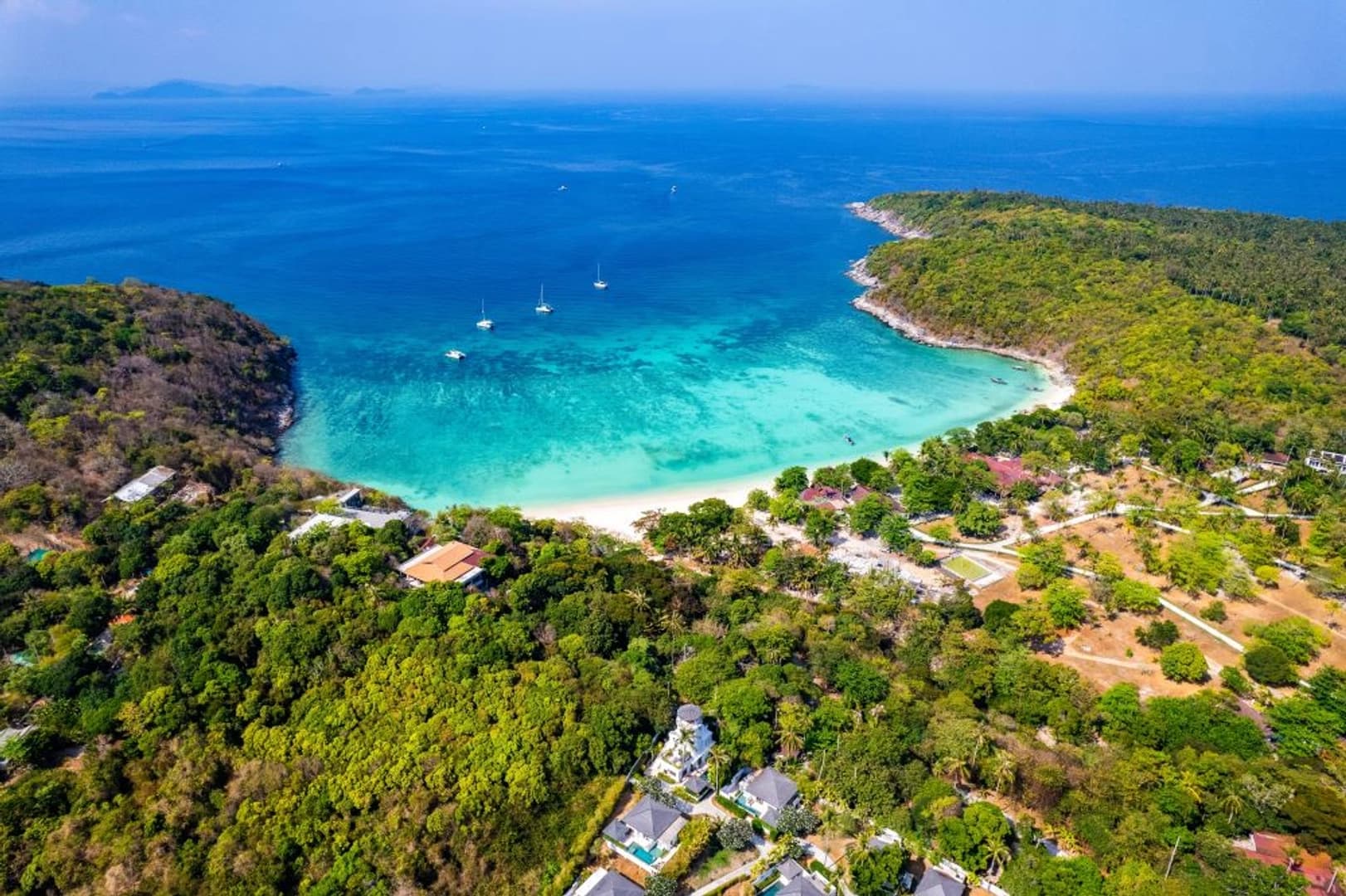
A popular island about 15-20 km south of Phuket, known for its white sand beaches, clear turquoise waters and excellent snorkeling and diving sites.
The southern sister of Racha Yai with deeper water and steeper slopes, better suited for diving than for casual beach time. The coastline is mostly rocky with limited sand pockets and stronger currents.
A large inhabited island between Phuket and Krabi with quiet bays, long beaches and low-density development. Day boats use it as a calm stopover with swim windows and short shore landings depending on the chosen side and sea state.
A large island north of Phuket used for day stops with a long sandy beach and shallow water on the west side. Boats typically anchor close to shore for swimming, walking the beach and short shade breaks.
A small private island east of Phuket with a calm anchorage and a narrow sandy strip used for short day stops. Access and shore use may be restricted depending on operating schedule and permissions.
The northernmost marina on Phuket, located on the sheltered eastern side near the bridge to the mainland. It serves as a year-round deep-water base for large sailing and motor yachts, protected from southwest swells and monsoon exposure. The approach channel is well-marked, and depth allows access at all tides. The shore area holds maintenance docks, a small hotel, crew facilities, restaurants and logistic services, creating a self-contained operating hub for private and commercial vessels.