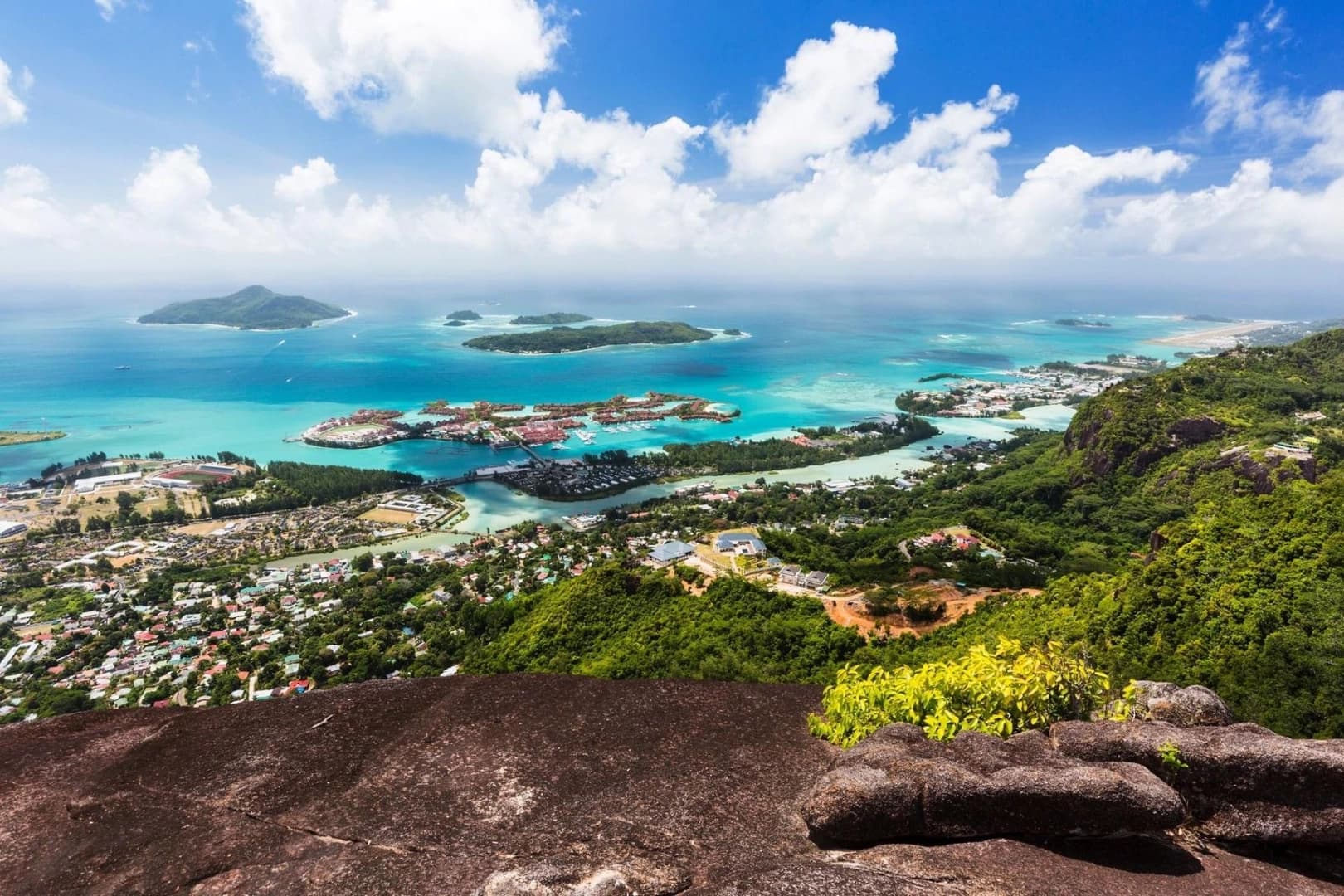
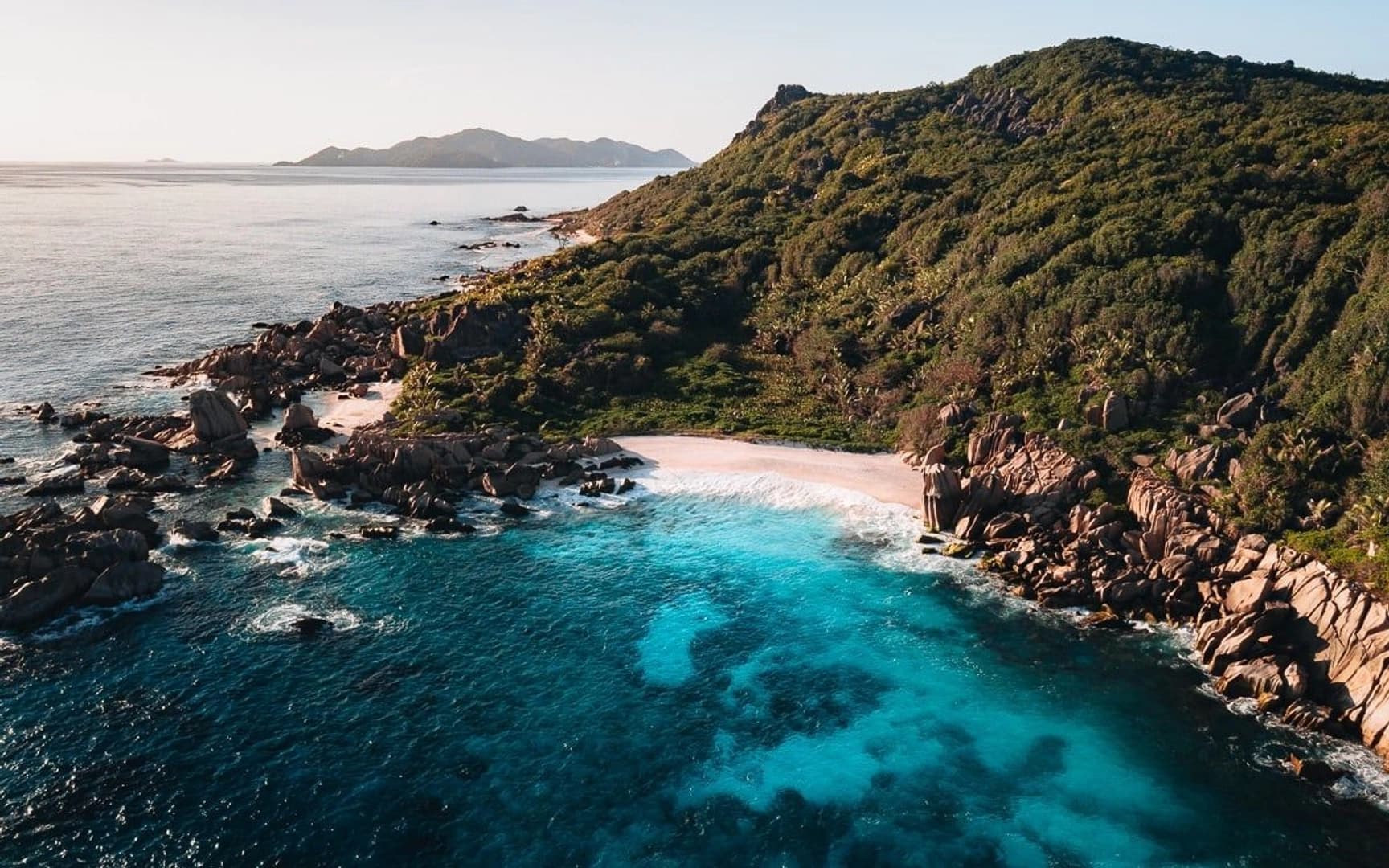
The largest island of the Seychelles archipelago, home to the capital Victoria and the country’s main port and airport. Mountain ridges run along its spine, covered with rainforest that drops steeply toward a narrow coastal plain and bays with fine white sand. The western coast faces the open Indian Ocean with scenic beaches, while the eastern side holds marinas, small islands and protected lagoons inside the reef belt.
A protected marine area northeast of Mahé that encompasses several small granitic islands - St Anne, Moyenne, Long, Round and Cerf -surrounded by shallow turquoise water and coral gardens. Established in 1973 as the first national marine park of the Seychelles, it serves as a conservation zone for fish, turtles and seagrass beds. The area is used for controlled snorkeling, day anchorage and limited shore visits, while overnight mooring requires special permits.
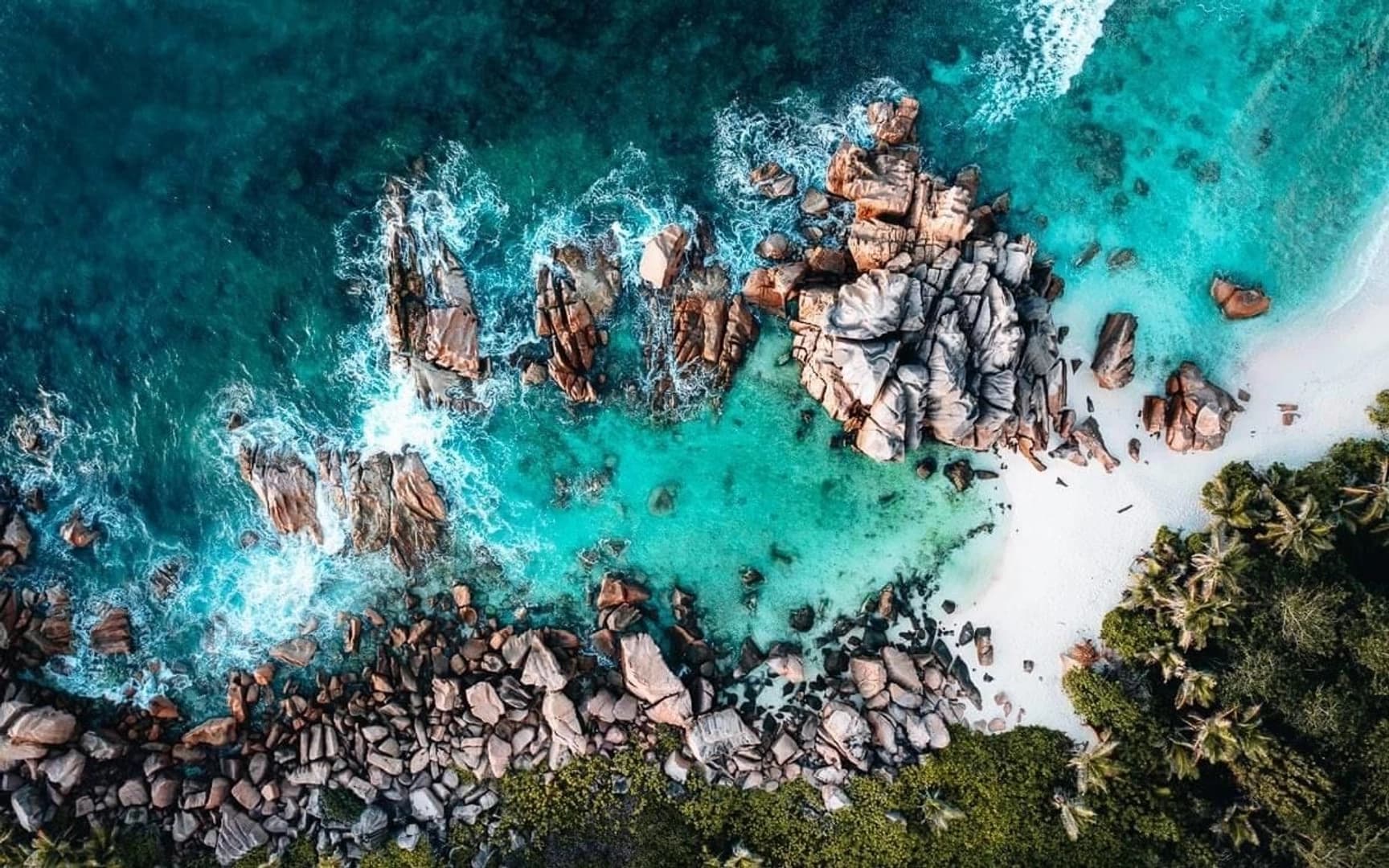
A marine protected area north of La Digue that includes the granite islands of Cocos, Félicité and the Sisters. Established to preserve reef ecosystems, it offers some of the clearest snorkeling water in the Seychelles with coral slopes, sea turtles and colorful fish in shallow lagoons. The park is accessible only by boat during the day, with anchoring and diving regulated under the Seychelles National Parks Authority.
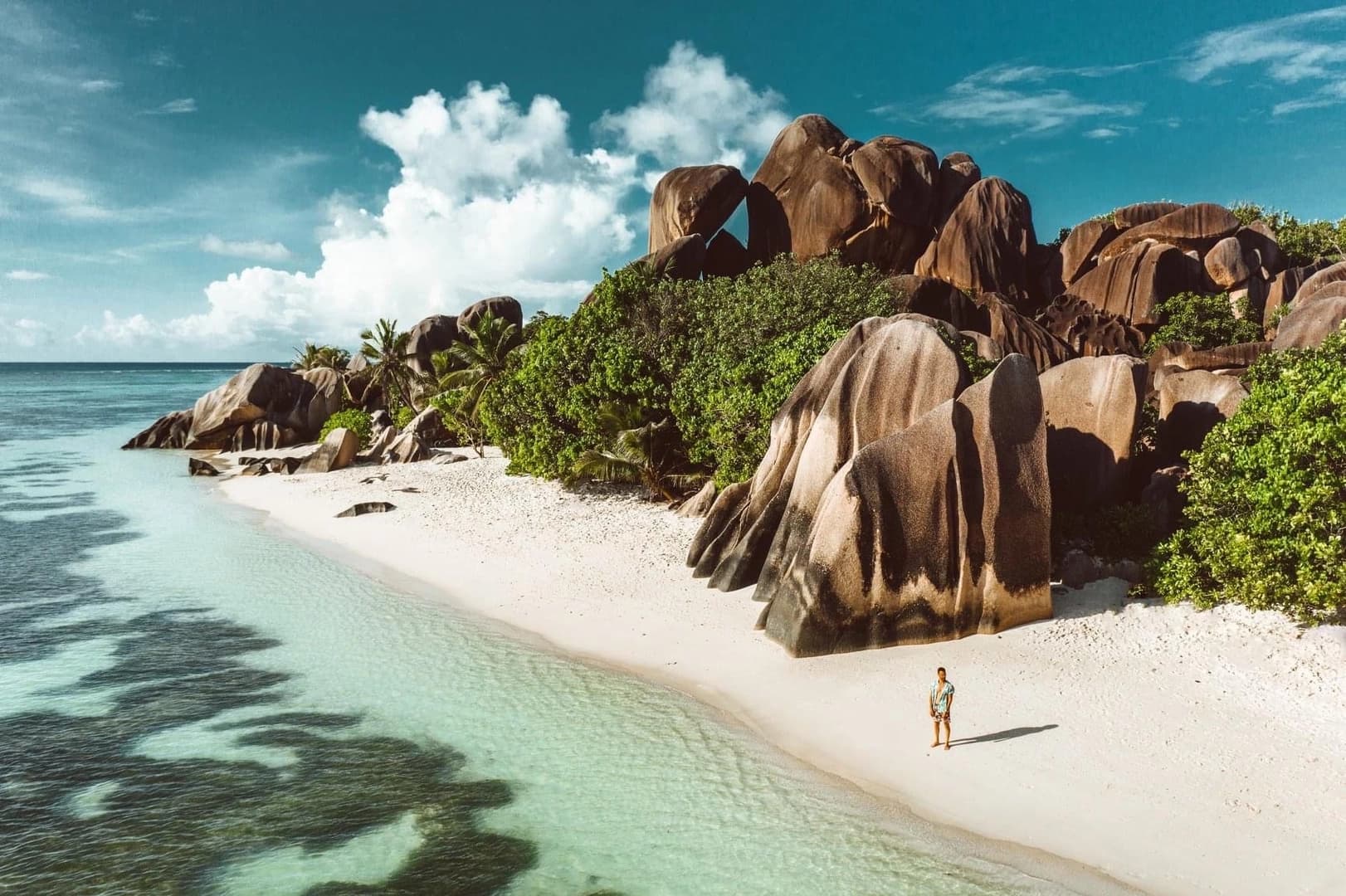
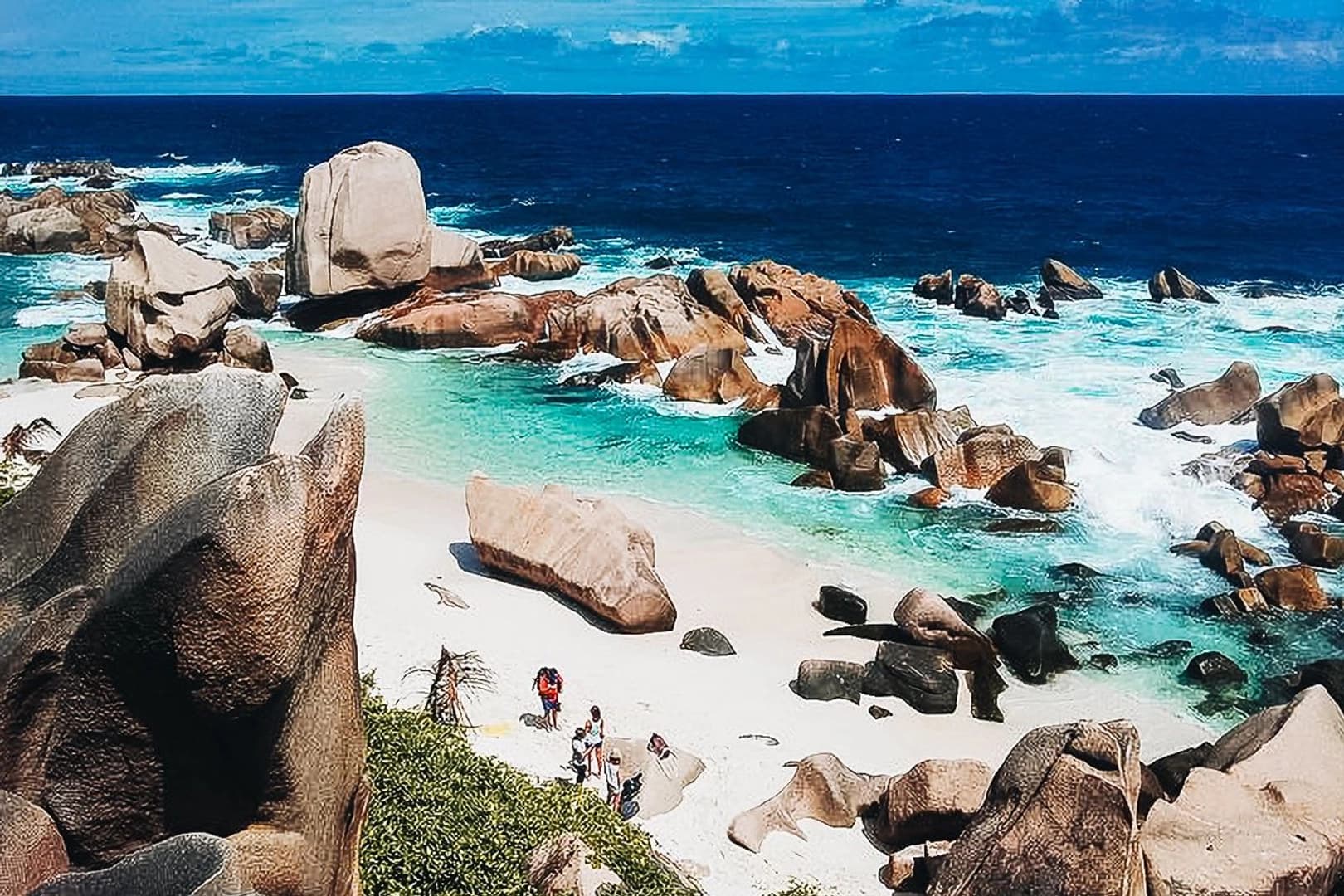
A small granite island east of Praslin, known for its slow rhythm, bicycle roads and some of the most photographed beaches in the world, including Anse Source d’Argent. The coastline alternates between sculpted boulder coves and shallow lagoons with coral sand, while the interior holds coconut groves and small villages. The island is connected by short ferry routes to Praslin and Mahé and remains a symbol of traditional island life in the Seychelles.
A coastal district and natural bay on the eastern side of Praslin, serving as the island’s main harbor and ferry terminal. The bay forms a calm anchorage protected from ocean swell, surrounded by low hills, village houses, and coconut trees. It functions as a logistic hub for transport to Mahé, La Digue, and the surrounding marine parks, while retaining a relaxed island atmosphere with small local shops and guesthouses along the road.
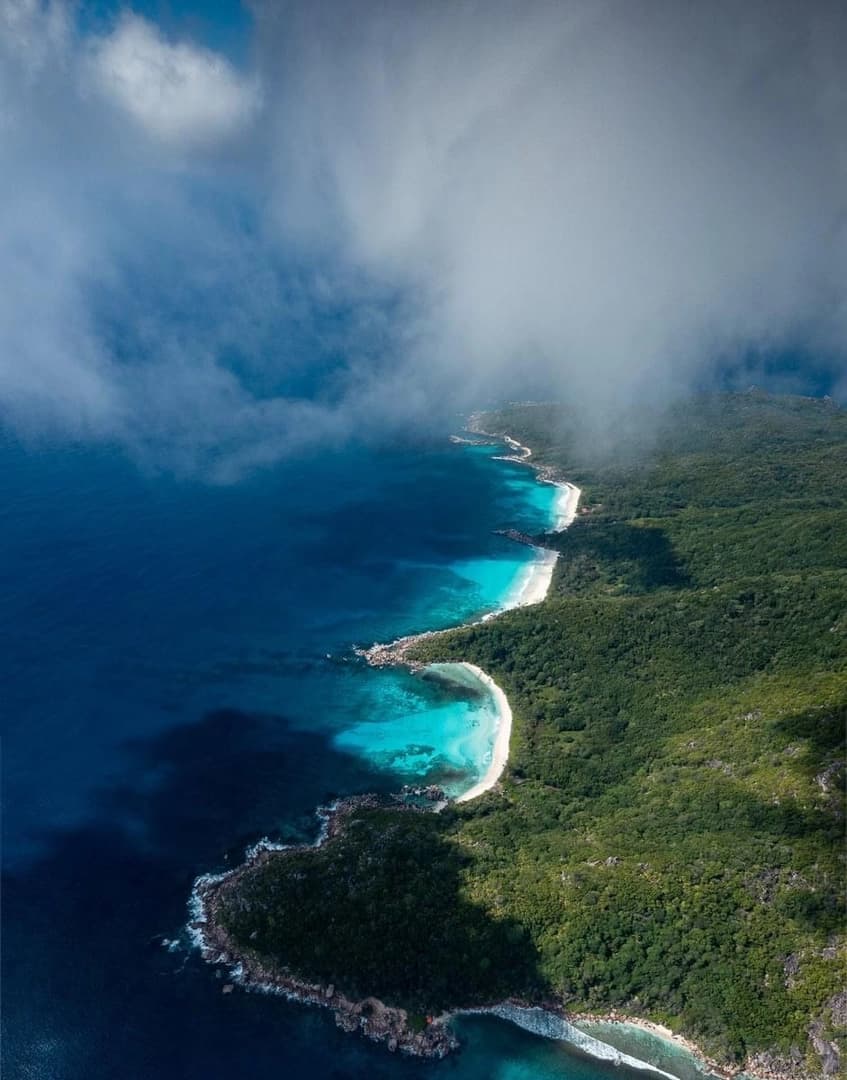
The second-largest island of the Seychelles, located northeast of Mahé and known for its dense palm forest Vallée de Mai, a UNESCO World Heritage site. The coastline alternates between wide calm bays and granite headlands, with beaches such as Anse Lazio and Anse Georgette ranked among the most scenic in the Indian Ocean. The island maintains small resorts, marinas, and ferry connections to Mahé and La Digue, combining natural seclusion with light infrastructure.
A protected palm forest in the center of Praslin Island, designated as a UNESCO World Heritage Site. The valley preserves the endemic coco de mer palm, whose enormous double nuts are found only in the Seychelles, along with black parrots and other native species. The dense canopy creates a shaded, humid atmosphere that contrasts with the island’s coastal light, and trails through the reserve follow ancient riverbeds under 40-meter palms.
A granitic island north of Praslin, part of the Curieuse Marine National Park, known for its free-roaming giant tortoises and the remains of a former leper colony. The coastline combines red granite formations with mangrove forests and shallow turquoise bays, while inland trails link the visitor area at Baie Laraie to the Doctor’s House museum and turtle nursery. The island is uninhabited and accessible only by day boats under park regulations.
A tiny granite islet off the northwest coast of Praslin, surrounded by turquoise water and coral reef shallows. Recognized for its leaning palms and sculpted rocks, it’s one of the signature postcard views of the Seychelles and a classic snorkeling stop on routes from Praslin to Curieuse. The island is uninhabited, and boat visits are limited to short swim sessions in calm weather.
A wide, west-facing bay on the northern tip of Praslin, framed by granite boulders and palm trees. The water is clear and deep close to shore, with firm sandy bottom and mild swell through most of the year. The open shape gives good holding for day anchorage in settled weather. In 2016, CNN listed Anse Lazio among the ten most beautiful beaches in the world.
A mountainous granitic island northwest of Mahé, forming part of a marine national park and known for its steep forested slopes rising straight from the sea. The island is surrounded by coral shelves and deep channels, with anchorage possible off La Passe on the eastern side in calm weather. Silhouette is the third-largest island of the Seychelles and a refuge for giant tortoises, endemic snails, and the rare sheath-tailed bat found nowhere else in the world.